

The Tube Machine Library
Carry the sound forward. Classic tube amplifiers, measured on the bench, playing through your own system.
Carry the sound forward.
Most people will never get to hear a great tube amplifier in their own room. The ones still around need the right tubes, the right bias, and someone who knows how to fix them, and those people are getting harder to find every year.
We want to change that. We restore these amplifiers to their original glory, with original parts as much as possible, then measure them and document them, and turn each one into a model you can play on your own system.
It's not voodoo and it's not a magic box. It's science: real measurements of a real amplifier driving a real speaker. With your support, and with Dr. Wierzba's help, we're building a real library.
Restore. Measure. Document. Then you play it.
Bring it back
Each amplifier is restored to its original glory, with original parts as much as possible. Only then do we measure it.
On the bench
Driven from quiet to the edge of clipping, into a real load and with real speakers, so we know exactly how it bends.
Keep its story
Photographs, measurements and a written history of every amplifier, so it is never just a preset.
Through your Acoustas
Switch it on in AirDSP and turn up Drive. It's subtle, so good speakers help, but once you hear it you won't want to listen without it. Watching TV? Turn it off. No tubes to heat up, no bias to chase.
From a real amplifier to your system.
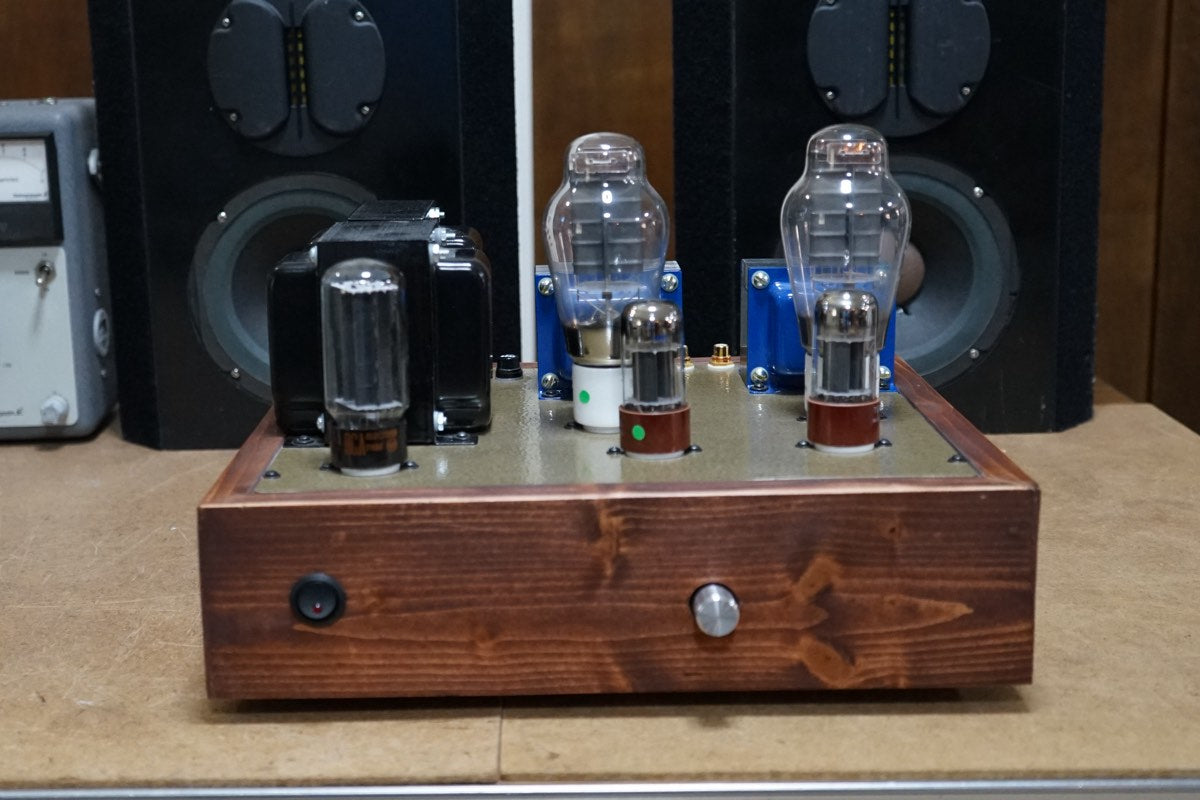
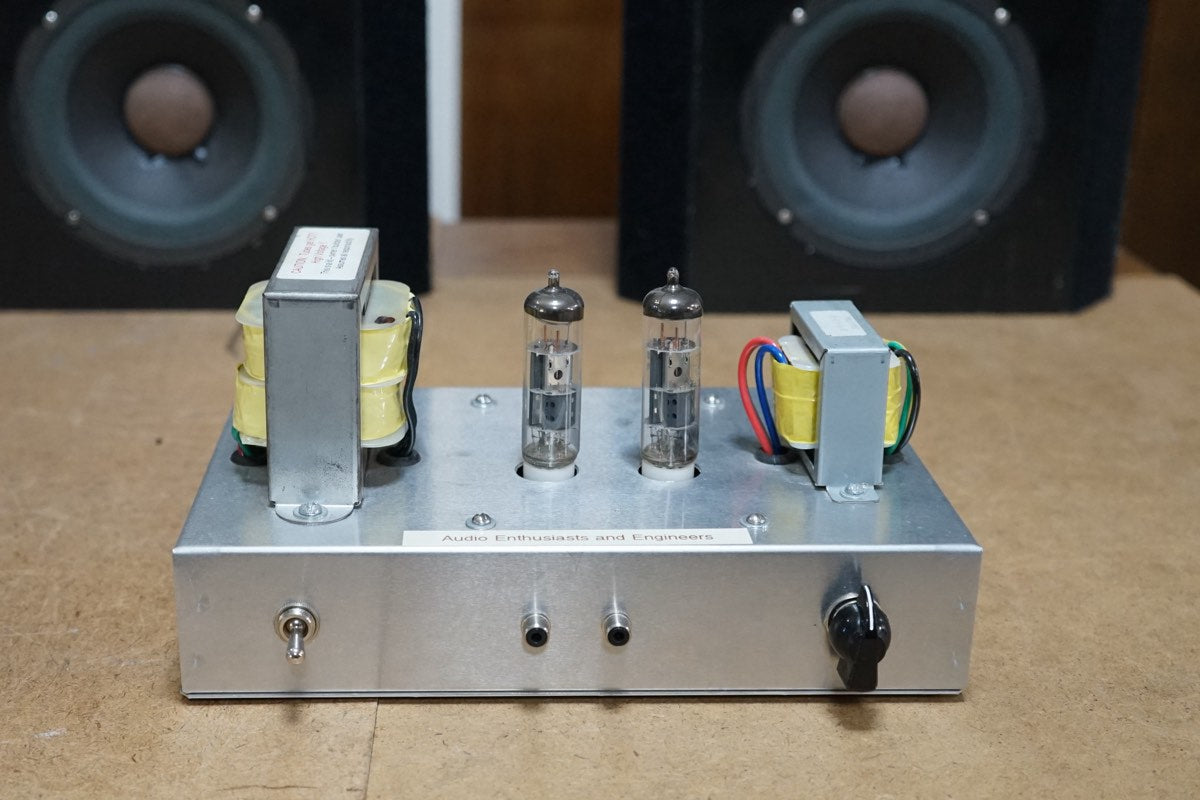
- It arrives. A real amplifier, the kind fewer people get to hear every year.
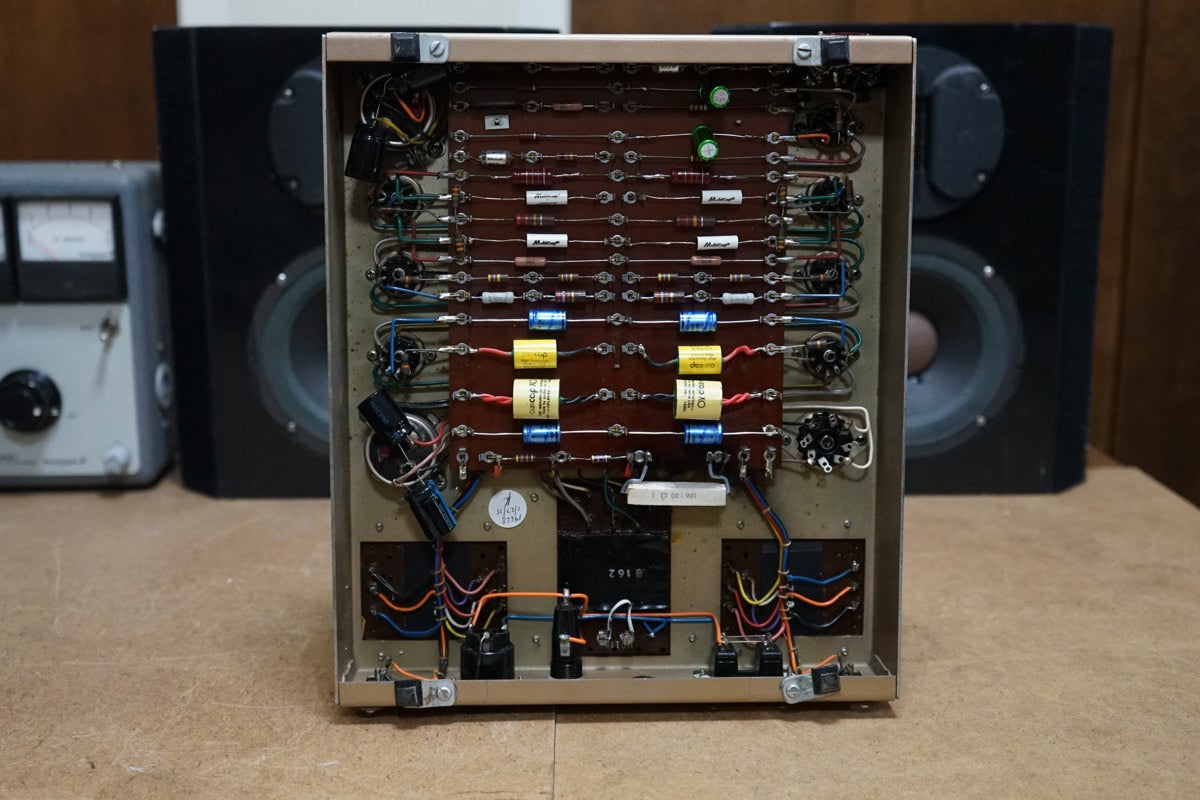
- We look inside. Every one is different underneath. This one is wired by hand, point to point.
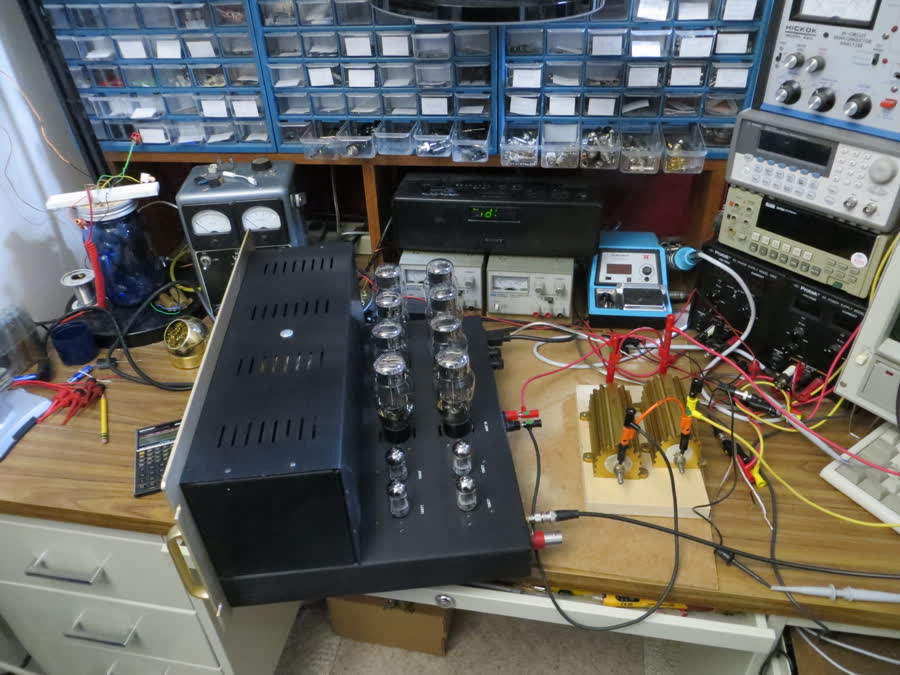
- Onto the bench. A signal generator, meters, and a load that stands in for a speaker.
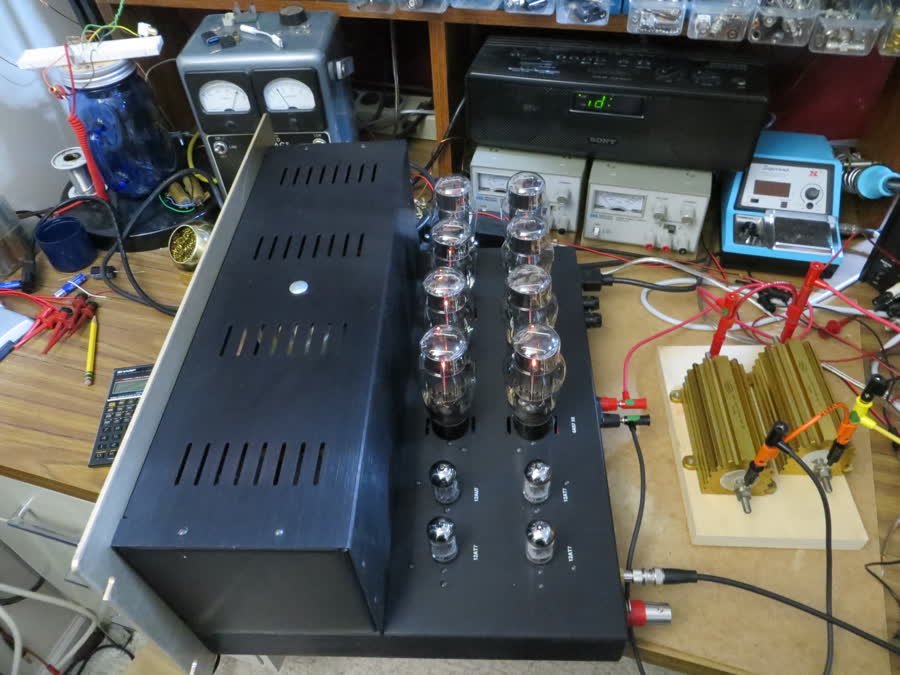
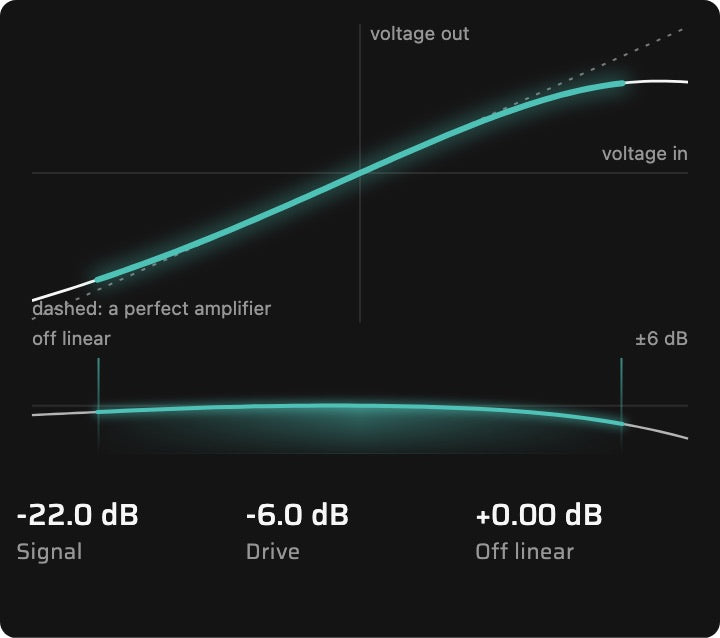
- Measured at every level. From quiet to the edge of clipping. From the bench, Dr. Wierzba calculates many parameters: the nonlinear transfer curve, the AC non-linear transfer curve, distortion and its harmonics, frequency response, noise, and more. The chart in the app is just one of them.
- With real speakers. A tube amplifier sounds different on every speaker, so we measure the pair.
- Into the library. The measurements become a model in AirDSP. This is the real chart from the app.
Pick an amplifier. Pick a speaker. Push it.
People think the tube sound is just the tube, some kind of magic in the glow. It isn't. It's the tube amplifier and the speaker together. The speaker's load changes with frequency, the amplifier reacts to it, and that combination is what you hear. That's why every model in the library is a pair, and why the speaker you pick matters a lot.
The slider stops where we heard each model start to sound broken, the same stop as in the app.
The curve is one snapshot. It shows how the amplifier bends the signal at a single moment, and it's a fun way to see what Drive is doing: whether you're in the linear region or pushing into the nonlinear region. But it's not everything going on. How the amplifier and speaker shape the tone across the frequency range is in the model too. You'll hear it. The chart just doesn't draw it.
Charts drawn by the app's own code from beta build 70. Drive runs as in the app, from -20 dB to each model's own stop. The music level is held steady so full Drive lights about 80% of the curve. In the app, the glow follows your music live. Details may change before release.
Dr. Gregory Wierzba
Dr. Gregory M. Wierzba has retired from being an associate professor of electrical and computer engineering at Michigan State University, and now fully focuses on his dream: vintage electronics. He earned his B.S.E.E. at Marquette University and his M.S.E.E. and Ph.D. in electrical engineering at the University of Wisconsin-Madison, and he has spent his career on analog electronics and circuit theory, including Symbolic SPICE, his software for symbolic circuit analysis. He has taught analog design to more than 10,000 students, his notes and texts are studied around the world, and he received MSU's Withrow Teaching Excellence Award. His courses also live on online as The Analog University.
He wrote the university's audio labs, and his courses cover the whole analog chain, from first circuits to vacuum tubes:
- ECE 491 Vacuum Tube Amplifiers
- ECE 201 / 202 Electric Circuits I and II
- ECE 302 Electronic Circuits
- ECE 402 Applications of Analog ICs
- ECE 404 RF Electronic Circuits
- ECE 418 Analog Macromodeling
- ECE 831 Analog Circuit Theory
- ECE 832 Analog IC Design
Plus the labs that go with them. His class notes are available at circuitlava.com.
He was one of the first people to believe in Audio Enthusiasts and Engineers, the student audio club at Michigan State. As its faculty adviser, he supported, assisted and helped build hundreds of audio components: guitar amplifiers, headphone amplifiers, preamps, tube amps, speakers, a Tesla coil speaker, and hundreds of other projects the students came up with. Many of those students now work at top audio, electronics and computer companies. The club still builds audio products today.
Outside the classroom, he collects: some of the rarest oscilloscopes, test equipment and tube amplifiers out there. A lot of the amplifiers he has salvaged would be gone without him.
How it started.
Some of the best tube amplifiers are no longer in production, and they're very hard to find. Dr. Wierzba has kept a lot of them running himself, so he knows what it takes. Tubes get mismatched. Bias drifts. A lot of the original tubes aren't made anymore, and in ten years there won't be many people left who can fix these amps.
Stas Todromovich, our founder, was one of the hundreds of students in Dr. Wierzba's classes, learning analog circuit design and, most importantly, audio circuits. Dr. Wierzba inspired him to switch from physics to electrical engineering. They became friends after Stas graduated, kept in touch through AEE, and whenever they got together, the conversation came back to tubes: how great these amplifiers sound on the right songs, and how hard it is to keep them sounding that way.
So the question became: can we capture what makes a tube amplifier sound the way it does, with science, and keep it?
"Wouldn't it be amazing if there was a library of these tube amplifiers, where you can learn about them and listen to them anytime you want, for any song you like?"
Then the two worlds collided. While Stas was building DSP, Dr. Wierzba started modeling tube amplifiers. They tried an amplifier built by AEE students. At first they couldn't hear much of a difference, because they were modeling the tube amp on its own. Once they connected it to a speaker and modeled the two together, the difference was real and easy to hear. It was an amazing moment, and it's why every model in the library is an amplifier and a speaker together. That AEE amplifier is still in the library.
Today Dr. Wierzba does the voicing for every model in the library, together with a mixing and mastering engineer. They measure each amplifier with its speakers and build the model. Then they test, analyze, and most of all listen to real music, switching between the real amp and the model. When something is off, they revise it. The goal isn't a model that only measures like the amplifier. It's one that sounds like it.
A year with every amplifier. Then keep your favorite forever.
The first 25 AC6150 and AC1200 owners get the whole Tube Machine Library free for a year. Live with every amplifier, find the one you love, and keep it, with its speakers.
Your year starts when Tube Machine is released or your unit arrives, whichever is later. Founders Editions are sold only at acoustas.com.
It keeps growing.
We keep measuring. Models get revisited and corrected, and new amplifiers and speakers join the library over time, delivered to the app without a hardware change.
We measured the real thing.
Tube Machine is not affiliated with, endorsed by, or representing any manufacturer. These are models we created by measuring real amplifiers and loudspeakers. Names identify the units we measured, nothing more.
One email when Tube Machine opens.
Nothing else.